
What vibrating screen mesh works best for mining and quarrying?
Polyurethane (PU) modular panels and reinforced rubber media represent the most efficient solutions for mining and quarrying, offering a wear life 5 to 10 times longer than standard steel. While high-tensile woven wire provides a high open area of 75% to 85%, it fails prematurely in abrasive environments processing over 400 tons per hour. Modern operations utilize 85-90 Shore A PU panels to maintain aperture tolerances within 0.1mm, reducing recirculating loads by 12%. For primary scalping involving boulders exceeding 300mm, steel-reinforced rubber provides the necessary energy absorption to prevent frame fatigue and reduces noise emissions by 20 decibels.
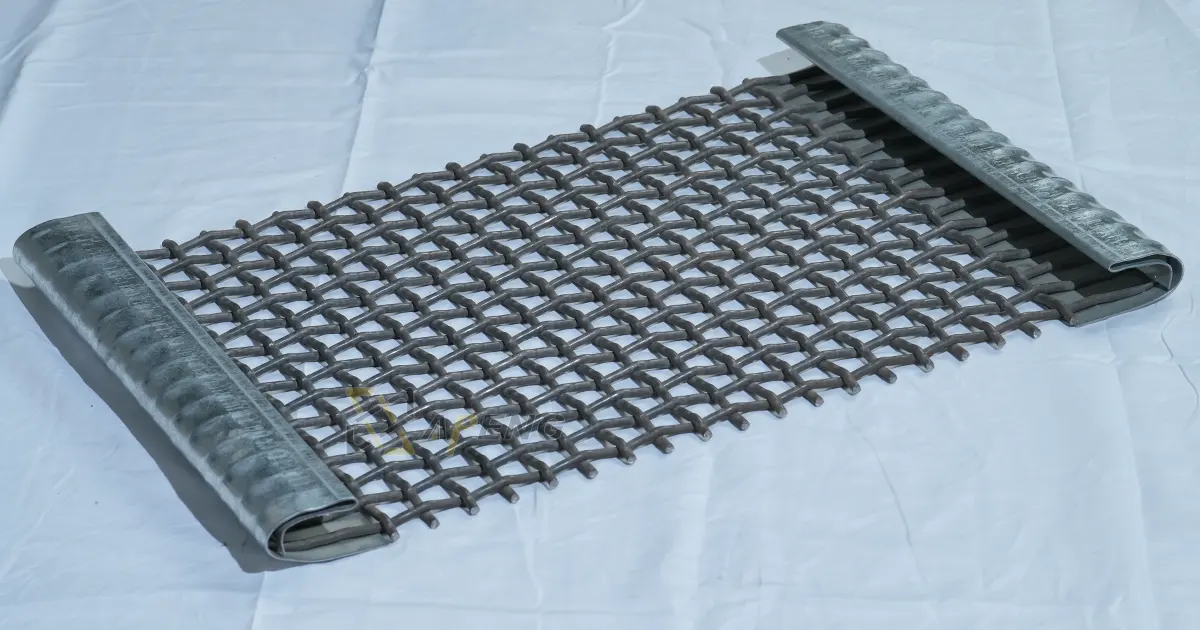
Selecting the appropriate media for high-capacity mineral processing involves calculating the trade-off between initial throughput and the frequency of mechanical intervention. In a 2024 industrial trial involving a gold mine in Western Australia, switching from traditional woven wire to vibrating screen mesh made of injection-molded polyurethane reduced the frequency of unplanned shutdowns from once every 14 days to once every 180 days. This shift is largely attributed to the material's ability to withstand the constant impact of abrasive quartz and granite without the localized thinning seen in metal strands.
The physical properties of the feed material, specifically its hardness on the Mohs scale and its moisture content, dictate which polymer or alloy will perform without failure. When moisture levels in the ore exceed 6%, standard metal apertures often suffer from surface tension that holds fine particles in place, leading to a complete loss of efficiency. Polyurethane panels solve this by using a tapered, "self-relieving" aperture design that is 15% wider at the bottom than the top, allowing any particle that enters the opening to pass through easily.
"Field data from an aggregate quarry processing 2 million tons of limestone annually showed that modular PU systems maintained a consistent grading accuracy of 98.2% throughout the entire lifecycle of the panels."
| Feature | Woven Wire (Steel) | Polyurethane (PU) | Rubber (Reinforced) |
| Abrasion Resistance | Moderate | Exceptional | High |
| Impact Handling | Low | Moderate | Exceptional |
| Typical Noise (dB) | 105+ | 85 - 90 | 80 - 85 |
| Replacement Speed | Slow (Full Deck) | Fast (Modular) | Medium |
The move toward modularity allows maintenance crews to address the "impact zone"—the first 25% of the screen surface—where the majority of wear occurs. Instead of removing a heavy 150kg wire roll, a technician uses a mallet to pop out a single 305mm x 610mm PU panel weighing less than 6kg. This targeted maintenance ensures that the rest of the deck, which may still have 60% of its wear life remaining, can continue to operate without being wasted.
This modular approach also allows for "zoned" screening, where different hardness levels are installed on a single deck to match the material's velocity and volume. On the top deck of a primary screen, thick rubber modules with a thickness of 40mm to 60mm absorb the kinetic energy of falling boulders, preventing the vibratory motor's force from cracking the steel side plates. Without this dampening effect, the structural frame of the machine can develop stress fractures within 2,000 hours of high-intensity operation.
"A 2025 technical report on quarry safety indicated that switching to synthetic media reduced heavy lifting injuries by 45% due to the lightweight nature of modular components."
The reduction in mechanical stress extends beyond the screen surface to the bearings and drive assemblies that power the equipment. Metal screens transmit every shock directly into the eccentric shaft, whereas polyurethane acts as a buffer that absorbs high-frequency harmonics. This absorption can extend the lifespan of expensive spherical roller bearings by an average of 18 months, avoiding the $10,000+ cost of a full gearbox rebuild.
Consistent grading is the final requirement for any quarry seeking to meet strict international road construction standards for aggregate shape and size. Steel wire stretches over time, causing the apertures to widen by 5% to 8% before the wire finally snaps, which leads to oversized material contaminating the final product. Synthetic panels are manufactured using precision molds that ensure every hole is identical, maintaining a flat screening surface that prevents "channeling" where material skips over the mesh.
"Independent testing on 10mm crushed stone showed that PU media reduced the percentage of 'flaky' or elongated particles by 14% compared to sagging wire screens."
In wet screening applications, such as sand washing or iron ore beneficiation, the chemical stability of the mesh becomes a primary factor in preventing downtime. Steel begins to oxidize immediately upon contact with process water, leading to "rust-binding" where the mesh becomes a solid plate within weeks. Modern synthetic vibrating screen mesh is entirely resistant to corrosion and most hydrocarbon-based processing chemicals, ensuring the open area remains at its theoretical maximum of 35% to 45% for the duration of the project.
Environmental regulations also play a role in media selection, as many quarries now operate near residential zones where noise levels are monitored. Replacing one large steel deck with polyurethane can drop the ambient noise by 15 to 20 decibels, bringing the operation into compliance with local ordinances without the need for expensive sound walls. This quieter operation allows staff to detect subtle changes in motor sound or gear friction, which are often the first signs of a looming mechanical failure.
Ultimately, the best mesh is determined by the total volume of material passed through the system before the first hole appears. While the initial procurement cost of a modular PU system is approximately 3 times higher than wire, the elimination of monthly change-outs and the increase in daily tonnage usually result in a full return on investment within the first 90 days of installation. For high-volume mines, this reliability is the difference between a profitable quarter and an operational deficit.
Stop babysitting clusters. Start shipping.
Book 30 minutes with a senior platform engineer. We'll audit your current K8s stack and show you the migration path in plain language — no slides, no sales script.
> book --assessment --slot this_week