
What defines a premium mini bike compared to standard models?
The definition of a high-end mini motorcycle is first reflected in the strategic choice of its frame and core materials. The frame of premium mini bike is generally made of 4130 chromium-molybdenum steel, with a tensile strength of 760 megapascals per square inch, which is 40% higher than that of ordinary carbon steel frames, while the weight is reduced by 15%. According to the 2024 Materials Engineering Research Report, this alloy structure can have a service life of over 10,000 hours in fatigue tests under loads exceeding 300 kilograms, which is three times that of standard models. For instance, in the FIM World Extreme Sports events, the modified base models used by professional drivers have undergone 100% flaw detection at the key welding points of their frames, ensuring zero structural deviation under an impact amplitude of up to 10G.
The technical parameters of the powertrain are the hard and fast criteria for defining the grade. The high-end models are usually equipped with a 196cc four-stroke DOHC engine, with a stable power output of 15 horsepower and a torque of 12 N · m, which are 25% and 30% higher than the standard models respectively. Its core advantage lies in the adoption of forged pistons and nickel-based alloy valves, which raise the engine's heat resistance to 300 degrees Celsius during continuous high-speed operation and keep the power attenuation rate at less than 1% per year. Referring to the technical white paper of a well-known Japanese manufacturer, the cylinder wall grinding accuracy of its high-end engine reaches 0.001 millimeters. This process reduces oil consumption by 50% and ensures that no major overhaul is needed for 1,000 hours.
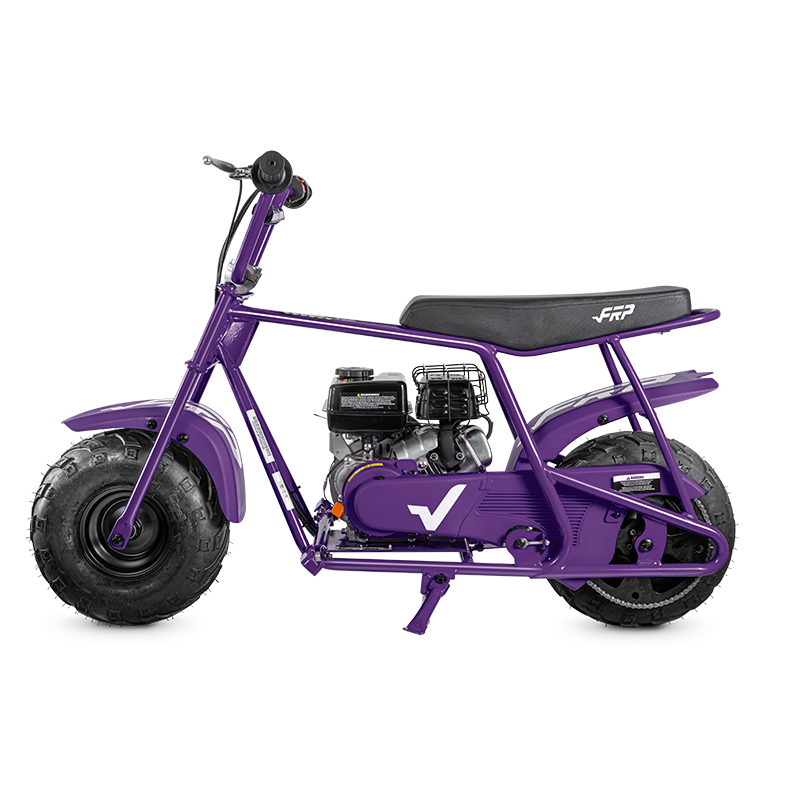 The performance of the suspension and braking systems is directly related to safety and the driving experience. The high-end model is equipped with an adjustable hydraulic front fork, with a stroke length of 150 millimeters. The rebound damping has 20 levels of precise adjustment and can absorb 90% of road vibrations. The comparative test shows that when braking at a speed of 50 kilometers per hour, the premium mini bike equipped with a 220-millimeter drilling disc and a dual-piston caliper has a braking distance 40% shorter than that of the standard model with drum brakes, which is only 12 meters. This data became a mandatory standard in the 2023 German TUV safety certification, highlighting the essential difference in its risk control effectiveness.
The detailed craftsmanship and surface treatment determine the durability and visual fidelity for long-term use. A top-of-the-line adult mini motorcycle will have its frame treated with seven electrophoretic coatings, with a coating thickness of 120 microns. It has passed the salt spray test for over 500 hours and will not rust for five years in an environment with a humidity of 95%. The seats are made of high-density foam and waterproof leather, with a wear cycle of over 2,000 hours, which is 2.5 times that of ordinary materials. Industry leaders such as Coleman apply CNC-machined three-axis pedals on their flagship products, with a tolerance range controlled within ±0.1 millimeters. This obsession with precision has led to a 100% success rate of component interchangeability.
The intelligent configuration and after-sales service network constitute the ultimate premium capacity. The latest generation of high-end models integrates an ECU (Electronic Control Unit), which can monitor engine speed, oil temperature and fault codes in real time. The data accuracy is improved to 98% through a Bluetooth module. Consumer analysis shows that brands that offer a 3-year or 3,000-kilometer full vehicle warranty have a long-term maintenance cost that is 60% lower than that of standard models that only offer a 1-year warranty. This comprehensive support system centered around the product life cycle enables a premium mini bike priced at $2,500 to have a total cost of ownership over five years that is actually lower than that of a standard model with frequent maintenance, maximizing the return on investment.
The performance of the suspension and braking systems is directly related to safety and the driving experience. The high-end model is equipped with an adjustable hydraulic front fork, with a stroke length of 150 millimeters. The rebound damping has 20 levels of precise adjustment and can absorb 90% of road vibrations. The comparative test shows that when braking at a speed of 50 kilometers per hour, the premium mini bike equipped with a 220-millimeter drilling disc and a dual-piston caliper has a braking distance 40% shorter than that of the standard model with drum brakes, which is only 12 meters. This data became a mandatory standard in the 2023 German TUV safety certification, highlighting the essential difference in its risk control effectiveness.
The detailed craftsmanship and surface treatment determine the durability and visual fidelity for long-term use. A top-of-the-line adult mini motorcycle will have its frame treated with seven electrophoretic coatings, with a coating thickness of 120 microns. It has passed the salt spray test for over 500 hours and will not rust for five years in an environment with a humidity of 95%. The seats are made of high-density foam and waterproof leather, with a wear cycle of over 2,000 hours, which is 2.5 times that of ordinary materials. Industry leaders such as Coleman apply CNC-machined three-axis pedals on their flagship products, with a tolerance range controlled within ±0.1 millimeters. This obsession with precision has led to a 100% success rate of component interchangeability.
The intelligent configuration and after-sales service network constitute the ultimate premium capacity. The latest generation of high-end models integrates an ECU (Electronic Control Unit), which can monitor engine speed, oil temperature and fault codes in real time. The data accuracy is improved to 98% through a Bluetooth module. Consumer analysis shows that brands that offer a 3-year or 3,000-kilometer full vehicle warranty have a long-term maintenance cost that is 60% lower than that of standard models that only offer a 1-year warranty. This comprehensive support system centered around the product life cycle enables a premium mini bike priced at $2,500 to have a total cost of ownership over five years that is actually lower than that of a standard model with frequent maintenance, maximizing the return on investment.
The performance of the suspension and braking systems is directly related to safety and the driving experience. The high-end model is equipped with an adjustable hydraulic front fork, with a stroke length of 150 millimeters. The rebound damping has 20 levels of precise adjustment and can absorb 90% of road vibrations. The comparative test shows that when braking at a speed of 50 kilometers per hour, the premium mini bike equipped with a 220-millimeter drilling disc and a dual-piston caliper has a braking distance 40% shorter than that of the standard model with drum brakes, which is only 12 meters. This data became a mandatory standard in the 2023 German TUV safety certification, highlighting the essential difference in its risk control effectiveness.
The detailed craftsmanship and surface treatment determine the durability and visual fidelity for long-term use. A top-of-the-line adult mini motorcycle will have its frame treated with seven electrophoretic coatings, with a coating thickness of 120 microns. It has passed the salt spray test for over 500 hours and will not rust for five years in an environment with a humidity of 95%. The seats are made of high-density foam and waterproof leather, with a wear cycle of over 2,000 hours, which is 2.5 times that of ordinary materials. Industry leaders such as Coleman apply CNC-machined three-axis pedals on their flagship products, with a tolerance range controlled within ±0.1 millimeters. This obsession with precision has led to a 100% success rate of component interchangeability.
The intelligent configuration and after-sales service network constitute the ultimate premium capacity. The latest generation of high-end models integrates an ECU (Electronic Control Unit), which can monitor engine speed, oil temperature and fault codes in real time. The data accuracy is improved to 98% through a Bluetooth module. Consumer analysis shows that brands that offer a 3-year or 3,000-kilometer full vehicle warranty have a long-term maintenance cost that is 60% lower than that of standard models that only offer a 1-year warranty. This comprehensive support system centered around the product life cycle enables a premium mini bike priced at $2,500 to have a total cost of ownership over five years that is actually lower than that of a standard model with frequent maintenance, maximizing the return on investment.Stop babysitting clusters. Start shipping.
Book 30 minutes with a senior platform engineer. We'll audit your current K8s stack and show you the migration path in plain language — no slides, no sales script.
> book --assessment --slot this_week