
How a 22kW Bidirectional DC Charger Works with Solar and Storage
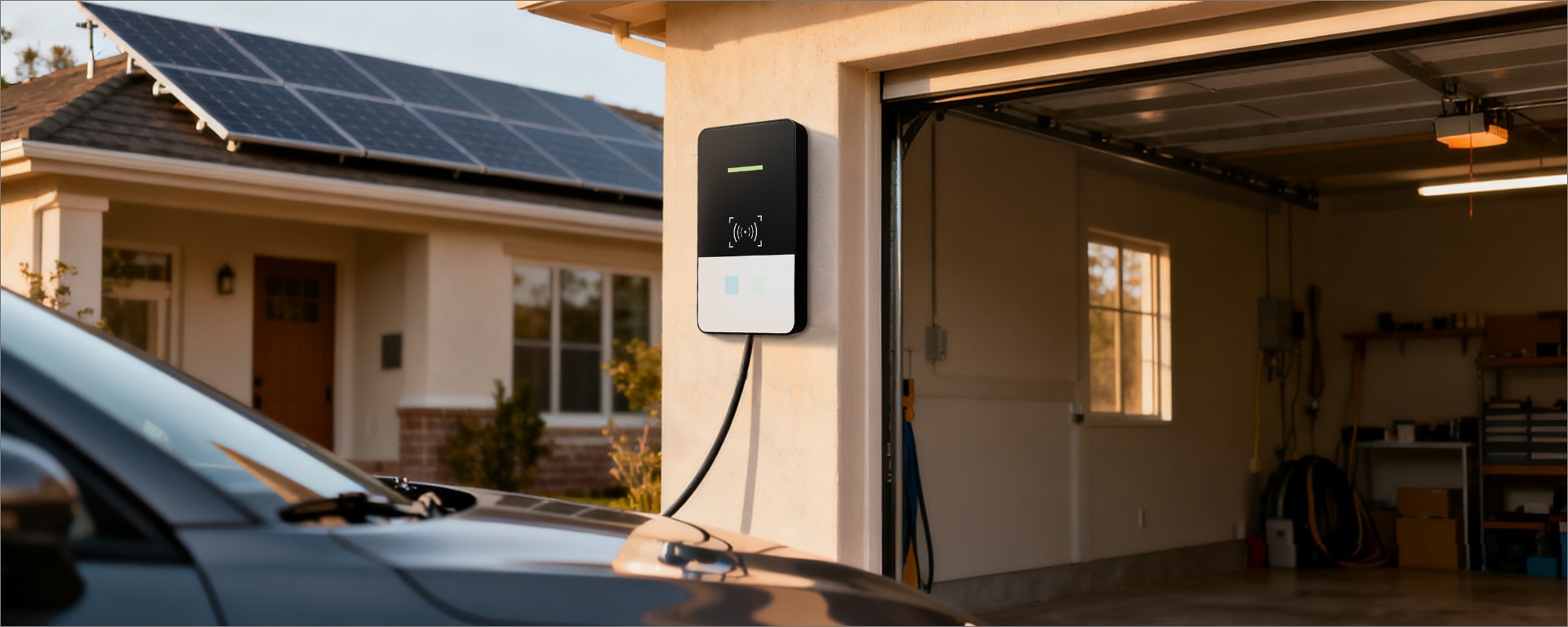
A 22kW bidirectional DC charger allows an EV battery to work as part of a home energy system by moving electricity in both directions. It can charge from solar panels, store surplus renewable power, and send electricity back to household loads. A typical 22kW system can transfer up to 22kWh of energy per hour under suitable conditions, making it suitable for homes using solar generation and battery storage.
A conventional EV charger only sends electricity from the grid to the vehicle. A bidirectional DC charger adds reverse power flow, allowing stored energy inside an EV battery to be used outside the vehicle. This changes the role of the EV from a transportation device into a flexible energy storage unit.
The operating process starts when solar panels generate electricity. If household demand is lower than solar production, excess electricity can be sent to the EV battery instead of being exported immediately. A home with a 8kW solar system producing surplus power for 5 hours could generate around 40kWh of extra electricity, which can partially charge a modern EV battery.
Solar power → Energy management system → Bidirectional charger → EV battery
EV battery → Bidirectional charger → Home electrical system
The charger manages the conversion between AC and DC power. During charging, it converts electricity into DC power suitable for the vehicle battery. During discharge, it converts stored DC energy back into usable electricity for household appliances.
A 22kW charger normally requires a three-phase electrical connection in many residential installations. Compared with common 7kW AC chargers, it can transfer energy at more than three times the power level. For an EV with an 80kWh battery, a full energy exchange at 22kW theoretically takes around 3.6 hours, although actual time depends on battery limits and charging efficiency.
The connection between solar and EV storage depends on an energy management system. This system monitors electricity generation, household consumption, battery status, and grid conditions.
| Energy source | Typical use |
|---|---|
| Solar electricity | Powers household appliances first |
| Extra solar power | Charges EV battery or home storage |
| EV battery energy | Supports home loads when solar is unavailable |
This approach can increase solar self-use. Many residential solar systems export unused electricity back to the grid when production exceeds demand. With a bidirectional charger, some of this electricity can remain available for later use.
The EV battery capacity determines how much energy can be stored. Many electric vehicles produced after 2020 have battery capacities between 50kWh and 100kWh. A 75kWh battery could provide several hours of backup power for essential household equipment such as lighting, refrigerators, communication devices, and heating systems.
A V2H charger uses communication between the vehicle, charger, and home energy system to control electricity flow. The charger does not simply release power whenever connected. It checks battery conditions, charging limits, and household requirements before transferring energy.
A vehicle battery with 70kWh capacity can store several times more electricity than many small home battery units, making EV-based storage attractive for residential applications.
The power conversion section inside a 22kW bidirectional DC charger includes semiconductor switches, DC/DC converters, control processors, and safety monitoring components. Modern systems increasingly use silicon carbide (SiC) components because they can operate at higher efficiency and reduce energy losses.
Many advanced chargers achieve conversion efficiency above 95%. For example, during a 20kWh energy transfer cycle, losses may be around 1kWh or less depending on system design, temperature, and operating conditions.
Battery protection is also managed during bidirectional operation. The charger communicates with the vehicle battery management system to monitor:
| Monitoring item | Purpose |
|---|---|
| State of charge | Controls available energy |
| Battery temperature | Maintains safe operation |
| Voltage level | Prevents abnormal charging |
| Current limit | Protects battery components |
The relationship between EV batteries and home storage systems depends on energy priorities. During sunny periods, solar electricity is usually used for immediate household needs first. Remaining power can charge the EV or stationary battery.
At night, when solar production stops, stored electricity can support household consumption. In areas with time-based electricity prices, the vehicle can also charge during lower-price periods and provide electricity during higher-price periods.
For example, if electricity prices are lower overnight and higher in the evening, an EV owner can charge the vehicle battery at night and use stored energy later. This operating method has been studied in V2H and V2G programs in Europe, North America, and Japan since the early 2010s.
The communication standard also affects system compatibility. ISO 15118 is one of the main communication standards developed for advanced EV charging. It allows the vehicle and charger to exchange information about charging requirements, battery conditions, and energy availability.
Vehicle compatibility remains an important consideration because not every EV supports two-way energy transfer. Some vehicles produced after 2021 include bidirectional charging functions, while others only accept one-way charging.
A complete solar and storage system usually includes several parts:
| Component | Function |
|---|---|
| Solar panels | Generate renewable electricity |
| Solar inverter | Converts solar output |
| Energy management system | Controls energy distribution |
| 22kW bidirectional DC charger | Transfers energy between EV and home |
| EV battery | Stores electricity |
The installation requirements are different from ordinary EV chargers. A 22kW bidirectional system may require electrical upgrades, compatible protection equipment, and professional setup. Homes with limited electrical capacity may need adjustments before installation.
Safety functions include isolation monitoring, overcurrent protection, temperature control, and automatic shutdown during abnormal grid conditions. These systems are designed to prevent unwanted electricity flow when the grid is unstable or disconnected.
The role of EVs in home energy systems is expected to expand as battery sizes increase. In 2024, many new electric vehicles offered battery capacities above 60kWh, while residential solar installations continued growing across markets such as the United States, Germany, Australia, and the United Kingdom.
A home with solar panels, storage batteries, and a bidirectional charger can operate more like a small energy network instead of a simple electricity consumer.
Future development will focus on lower equipment costs, wider vehicle compatibility, and improved charging standards. As more EV models support two-way charging, the combination of renewable energy and vehicle storage may become a common option for households seeking more flexible electricity management.
Stop babysitting clusters. Start shipping.
Book 30 minutes with a senior platform engineer. We'll audit your current K8s stack and show you the migration path in plain language — no slides, no sales script.
> book --assessment --slot this_week